Technology
"Our mission is to provide customers with a professionally constructed farm fencing."– Hebei Jinshi Industrial Metal Co, Ltd.
T Post vs Y Post: Which Fence Post Is Better for Farm Fencing?
When choosing a steel fence post for farm and agricultural fencing, two popular options are T Posts and Y Posts, also known as Star Pickets.
Both are designed to support wire fencing and are widely used for farms, livestock fencing, field fencing, boundary fencing and other agricultural applications.
But what is the difference between a T Post and a Y Post? And which one is better for your fencing project?
The best choice depends on your fence type, installation requirements, local market and the wire or mesh you plan to use.
T Post vs Y Post: Quick Comparison
| Feature | T Post | Y Post / Star Picket |
|---|---|---|
| Shape | T-shaped | Star-shaped |
| Common markets | USA, North America | Australia, New Zealand |
| Main applications | Farm, field and livestock fencing | Farm, field and livestock fencing |
| Wire attachment | Studs or clips | Holes or clips |
| Installation | Driven into the ground | Driven into the ground |
| Material | Steel | Steel |
| Surface options | Painted, galvanized, bitumen | Painted, galvanized, bitumen |
| Installation | Easy | Easy |
Both products are practical steel fence posts. However, T Posts are particularly common in North America, while Y Posts or Star Pickets are widely used in Australia and New Zealand.
What Is a T Post?
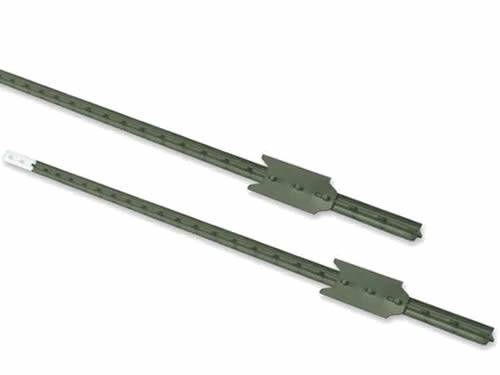
A T Post is a steel fence post with a T-shaped cross-section. It is commonly used for agricultural and livestock fencing.
Most T Posts have studs along the post. These studs help hold fencing wire in position and make it easier to attach wire without welding or drilling.
T Posts are available in different lengths and weights to meet different fencing requirements. Surface treatments can include painted finishes, hot-dip galvanizing and black bitumen.
Common T Post Applications
T Posts can be used for:
- Farm and field fencing
- Livestock fencing
- Deer and wildlife fencing
- Barbed wire fencing
- Wire mesh fencing
- Property boundary fencing
- Temporary fencing
- Tree and plant support
Their simple installation makes them suitable for both professional fencing contractors and agricultural users.
What Is a Y Post or Star Picket?
A Y Post, also called a Star Picket or Star Post, is a steel fence post with a three-pointed star-shaped cross-section.
Y Posts are commonly used for agricultural fencing. Many designs include holes along the post, allowing wire or mesh to be attached securely.
The pointed end can be driven into the ground using a suitable post driver.
Common Y Post Applications
Y Posts are commonly used for:
- Farm fencing
- Field fencing
- Cattle fencing
- Sheep fencing
- Game fencing
- Wire mesh fencing
- Temporary fencing
- Property boundary fencing
Y Posts are especially familiar in Australia and New Zealand, making them a popular choice for agricultural fencing in these markets.
What Is the Difference Between T Post and Y Post?
The main difference is the post shape and wire attachment system.
A T Post has a T-shaped profile and normally uses studs to hold the wire.
A Y Post has a star-shaped profile and commonly uses holes or clips for attaching wire.
Both provide strong support for wire fencing, but regional market preferences can be an important factor when selecting between them.
For example:
- United States: T Posts are widely used.
- Australia: Y Posts / Star Pickets are very common.
- New Zealand: Y Posts / Star Pickets are widely used.
- Other markets: Both types may be suitable depending on local fencing practices.
Which Is Stronger: T Post or Y Post?
There is no simple answer because the strength of a fence post depends on more than its shape.
Important factors include:
- Steel quality
- Post weight
- Post thickness
- Post length
- Cross-section design
- Surface treatment
- Soil conditions
- Fence height
- Fence tension
A heavier T Post may provide more support than a lightweight T Post. The same applies to Y Posts.
For this reason, buyers should compare post weight and specifications, rather than choosing a product based only on the name.
T Post vs Y Post: Which Is Easier to Install?
Both T Posts and Y Posts are designed for relatively easy installation.
A typical installation process is:
- Mark the fence line.
- Determine the post spacing.
- Position the posts.
- Drive the posts into the ground.
- Attach the wire or mesh.
- Check the fence alignment and tension.
A manual or mechanical post driver can make installation faster.
T Posts with studs allow fencing wire to be attached directly to the post. Y Posts with holes can also provide convenient attachment points for fencing wire.
How Far Apart Should T Posts or Y Posts Be?
There is no single spacing that works for every fence.
The correct spacing depends on:
- Fence type
- Fence height
- Wire or mesh type
- Soil conditions
- Terrain
- Livestock
- Fence tension
- Wind exposure
Light agricultural fencing may allow wider spacing, while heavier livestock fencing may require closer spacing.
For large projects, post spacing should be determined according to the complete fencing system rather than the post alone.
How Deep Should a T Post or Y Post Be?
The required installation depth depends on the total post length, fence height, soil conditions and application.
The post should be driven deep enough to provide stable support and resist movement.
Loose or sandy soil may require different installation practices compared with hard or compact soil.
For livestock fencing or high-tension fencing, proper installation depth is particularly important.
Galvanized T Post vs Painted T Post
Surface treatment is another important factor when selecting steel fence posts.
Painted T Post
Painted T Posts are an economical option for many fencing applications.
They are commonly available in colors such as green, black or orange.
Galvanized T Post
Hot-dip galvanized T Posts have a zinc coating that helps improve corrosion resistance.
They are suitable for fencing projects exposed to rain, moisture and outdoor conditions.
The best surface treatment depends on the project environment, expected service life and budget.
Can T Posts and Y Posts Be Used With Wire Mesh?
Yes. Both types can be used with different kinds of wire fencing.
T Post + Field Fence
A common combination for farms and livestock fencing.
T Post + Barbed Wire
Suitable for boundary fencing and applications requiring additional deterrence.
T Post + Welded Wire Mesh
Useful for farms, gardens, animal enclosures and property boundaries.
Y Post + Field Fence
A popular agricultural fencing combination, especially in markets where Star Pickets are commonly used.
Y Post + Cattle or Sheep Fence
Suitable for livestock fencing when the correct mesh and post specifications are selected.
The correct combination depends on the animal, fence height, mesh specification and local conditions.
Which Fence Post Should You Choose?
Choose T Posts if:
- You are supplying the U.S. or North American market.
- You need a traditional T-shaped steel fence post.
- You are installing farm or field fencing.
- You want studs for attaching fencing wire.
- You need a practical and economical fencing solution.
Choose Y Posts / Star Pickets if:
- You are supplying Australia or New Zealand.
- Star Pickets are commonly used in your local market.
- You need posts for field or livestock fencing.
- Your fencing system uses holes or clips for wire attachment.
- You need a versatile steel post for agricultural fencing.
For larger fencing projects, consider the entire system, including the post, mesh, wire, spacing, installation depth and ground conditions.
T Post and Y Post Supplier for Agricultural Fencing
Hebei Jinshi Industrial Metal Co., Ltd. supplies T Posts, Y Posts and Star Pickets for agricultural and fencing applications.
Different post lengths, weights and surface treatments can be supplied according to project and market requirements.
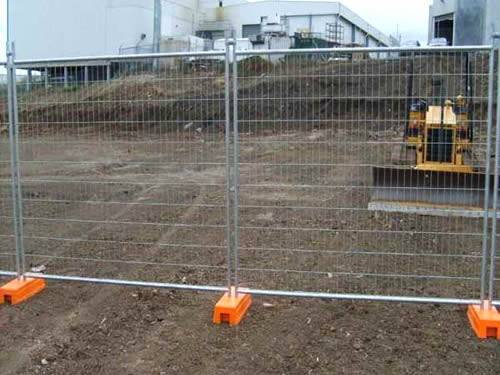
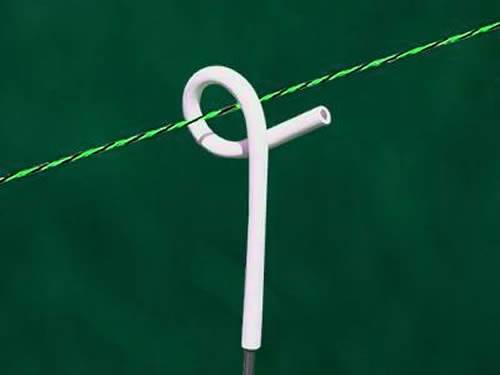
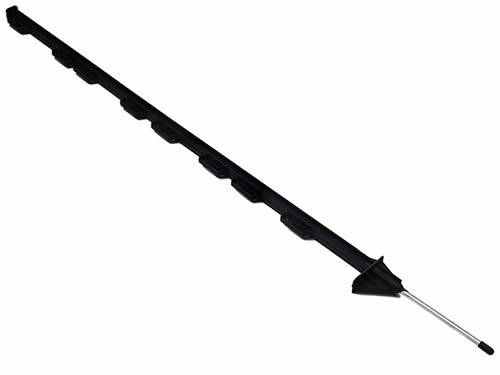
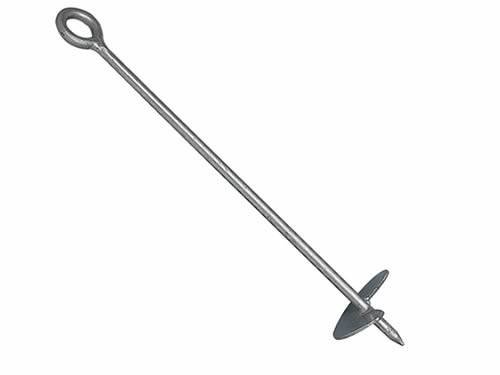
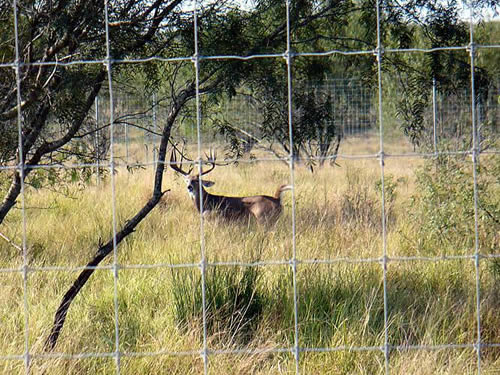
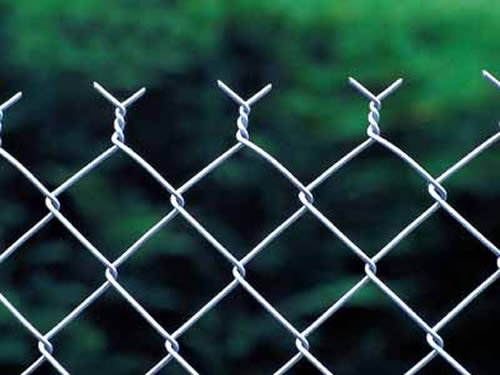
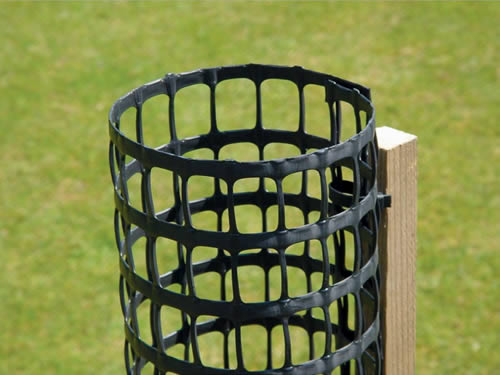
Our fencing product range also includes Chain Link Fence, Field Fence, Electric Fence Posts, Farm Gates, Cattle Yard Panels, Temporary Fence and Ground Anchors.
Whether you are a fencing distributor, wholesaler, contractor or agricultural supplier, selecting the correct fence post is an important part of building a durable and cost-effective fencing system.
Frequently Asked Questions
Is a T Post the same as a Y Post?
No. A T Post has a T-shaped cross-section, while a Y Post or Star Picket has a star-shaped cross-section.
Which is better, T Post or Y Post?
Neither is universally better. The right choice depends on the market, fencing system, wire type, soil conditions and project requirements.
Are T Posts good for farm fencing?
Yes. T Posts are widely used for farm, field, livestock, deer and wildlife fencing.
Are Y Posts good for livestock fencing?
Yes. Y Posts are commonly used with cattle, sheep and other agricultural fencing systems.
Are T Posts galvanized?
Yes. T Posts can be supplied with different surface treatments, including hot-dip galvanized and painted finishes.
What is another name for a Y Post?
Common names include Star Picket, Star Post, Steel Picket and Y Fence Post.
Can T Posts be used with barbed wire?
Yes. T Posts are commonly used to support barbed wire fencing.
Can Y Posts be used with field fence?
Yes. Y Posts are widely used with field fence and other agricultural wire fencing.
Conclusion
T Posts and Y Posts are both practical steel fence posts for agricultural fencing.
T Posts are widely used in North America, while Y Posts or Star Pickets are particularly popular in Australia and New Zealand.
When choosing between them, consider post weight, length, surface treatment, wire type, spacing, soil conditions and the fencing application.
The right fence post, combined with the correct wire or mesh and proper installation, can provide a durable and cost-effective fencing solution for farms, livestock and property boundaries.