Technology
"Our mission is to provide customers with a professionally constructed farm fencing."– Hebei Jinshi Industrial Metal Co, Ltd.
What Is Chain Link Fence? A Complete Guide to Types, Uses, Materials and Buying
www.cnfence.com/products/chain-link-fence.html
What Is Chain Link Fence?
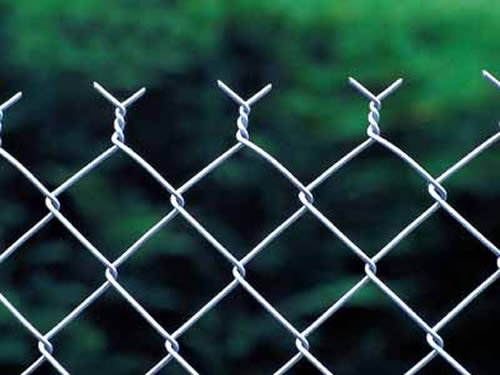
A chain link fence is a type of woven wire fence made from steel wire that forms a continuous diamond-shaped mesh.
It is one of the most widely used fencing systems for residential, commercial, agricultural, industrial and security applications.
Unlike welded wire fence or rigid metal panels, chain link fence is manufactured by continuously weaving steel wire into a flexible mesh. The open diamond pattern provides visibility, airflow and relatively easy installation, while galvanized or polymer coatings help protect the steel from corrosion.
For buyers, distributors and contractors, chain link fencing is attractive because the system can be customized according to wire diameter, mesh opening, fence height, coating, color, roll length and supporting posts.
In simple terms:
Chain link fence = woven steel wire mesh + protective coating + posts and fittings.
How Is Chain Link Fence Made?
The manufacturing process is relatively simple, but the quality of the finished fence depends heavily on the wire, mesh size, weaving accuracy and surface treatment.
The typical manufacturing process includes:
1. Steel Wire Preparation
Steel wire is processed to the required diameter before entering the chain link machine.
Common specifications vary depending on the intended application. Heavier wire is generally selected for commercial, industrial and higher-security fencing.
2. Wire Galvanizing or Coating
The steel wire can be galvanized to improve corrosion resistance.
Chain link fabric may be produced using wire that is galvanized before weaving or the finished fabric can be galvanized after weaving. These are commonly referred to as GBW and GAW respectively.
PVC-coated chain link fence can also be produced by adding a protective polymer layer over the steel wire.
3. Diamond Mesh Weaving
The wire is continuously bent and interwoven to create the characteristic diamond pattern.
Unlike welded mesh, the wires are not welded at every intersection. This gives chain link fabric flexibility and makes it relatively easy to roll, transport and install. ASTM terminology defines chain link fabric as wire that is helically wound and interwoven into continuous mesh.
4. Cutting and Rolling
After reaching the required height and length, the chain link fabric is cut and rolled into compact rolls for transportation.
The finished rolls can then be supplied together with fence posts, rails, tension wire, fittings and gates to create a complete chain link fencing system.
What Are the Main Types of Chain Link Fence?
There are several ways to classify chain link fencing.
The most common types are based on surface coating, application and security requirements.
1. Galvanized Chain Link Fence
Galvanized chain link fence is made from steel wire protected by a zinc coating.
The zinc layer helps protect the underlying steel from rust and corrosion, making galvanized chain link fencing a popular choice for outdoor applications.
It is commonly used for:
- Residential fencing
- Agricultural fencing
- Commercial properties
- Industrial facilities
- Construction sites
- Warehouses
- Perimeter fencing
For long-term outdoor projects, buyers often compare different galvanizing methods and coating levels rather than simply asking whether the fence is “galvanized.”
2. PVC Coated Chain Link Fence
PVC coated chain link fence uses a steel wire core with an additional polymer coating.
The PVC coating provides:
- Additional corrosion protection
- A smoother surface
- Better appearance
- Color options
- Improved suitability for residential and recreational areas
Common colors include:
- Black
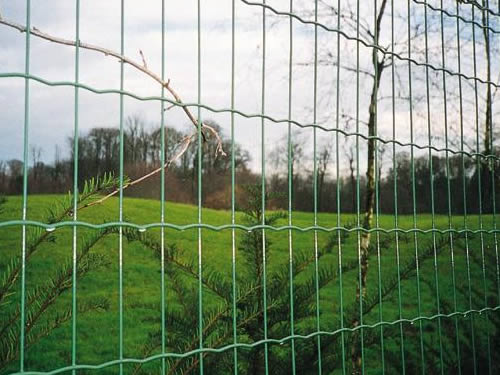
- Green
- Brown
- Other customized colors
PVC-coated chain link fence is particularly common around gardens, parks, schools, sports facilities and residential properties.
3. Heavy-Duty Chain Link Fence
Heavy-duty chain link fencing uses thicker wire and/or smaller mesh openings to provide a stronger perimeter barrier.
It is commonly used for:
- Industrial facilities
- Warehouses
- Factories
- Infrastructure projects
- Utility facilities
- High-security areas
The important point is that fence strength does not depend on wire diameter alone.
The complete system should also consider:
- Mesh opening
- Fence height
- Post size
- Post spacing
- Top rail
- Tension wire
- Fittings
- Gate design
What Are the Standard Chain Link Fence Specifications?
When buying chain link fence, customers should pay attention to several specifications.
1. Mesh Opening
The mesh opening is the diamond-shaped opening between the wires.
Common chain link mesh sizes include:
- 1 inch
- 1.5 inch
- 2 inch
- 2.5 inch
- 3 inch
- 4 inch
A smaller mesh opening generally provides a tighter barrier and can be useful for applications requiring additional containment or security.
The appropriate mesh size depends on the project rather than simply choosing the smallest available opening.
2. Wire Diameter
Wire diameter is one of the most important purchasing specifications.
A thicker wire generally provides greater mechanical strength, but it also increases material consumption and cost.
Therefore, buyers should select wire diameter according to:
Application → required strength → mesh size → budget
Instead of simply choosing the thickest wire available.
3. Fence Height
Chain link fencing can be manufactured in different heights depending on the project.
Typical applications include:
- Garden fencing
- Pet fencing
- Residential boundaries
- Commercial fencing
- Industrial perimeter fencing
- Sports facilities
- Security fencing
For professional projects, fence height should also be coordinated with post length and installation depth.
Chain Link Fence vs Welded Wire Fence
A common question from buyers is:
“Should I choose chain link fence or welded wire fence?”
The answer depends on the application.
| Feature | Chain Link Fence | Welded Wire Fence |
|---|---|---|
| Structure | Woven wire | Welded intersections |
| Appearance | Diamond mesh | Square/rectangular mesh |
| Flexibility | High | Lower |
| Installation | Relatively simple | Panel or roll dependent |
| Terrain adaptability | Good | Depends on design |
| Customization | High | High |
| Typical use | Perimeter fencing | Garden, agricultural, security |
| Transportation | Compact rolls | Rolls or rigid panels |
Chain link fencing is especially attractive when the project needs a flexible, economical and easy-to-transport perimeter solution.
Where Is Chain Link Fence Used?
One reason chain link fencing remains popular is its versatility.
Residential Fencing
Chain link fence can be used around:
- Backyards
- Gardens
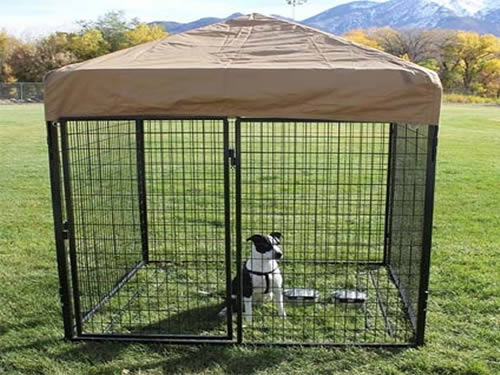
- Pet areas
- Driveways
- Residential boundaries
Its open structure provides visibility without creating a completely solid barrier.
Agricultural Fencing
Chain link fencing can be used for:
- Farm boundaries
- Animal enclosures
- Poultry areas
- Storage areas
- Garden protection
The appropriate wire diameter and mesh size should be selected according to the animals and level of protection required.
Commercial and Industrial Fencing
For factories, warehouses and commercial properties, chain link fencing can provide a practical perimeter barrier.
It can be combined with:
- Steel posts
- Top rails
- Tension wire
- Barbed wire
- Security gates
- Privacy slats
This allows a basic chain link fence to be upgraded into a more complete perimeter security system.
Sports Facilities
Chain link fencing is widely used around:
- Tennis courts
- Basketball facilities
- Baseball fields
- Soccer fields
- Playgrounds
The open mesh allows spectators to see through the fence while helping contain balls and define the playing area.
What Are the Advantages of Chain Link Fence?
Why do so many projects choose chain link fencing?
1. Cost-Effective
Chain link fencing can provide a large amount of perimeter coverage without the material cost of many solid fencing systems.
2. Good Visibility
The open diamond mesh does not completely block the view.
3. Good Airflow
Unlike solid walls, chain link fencing allows air to pass through the fence.
4. Flexible
The woven structure can adapt better to certain ground conditions than rigid fencing panels.
5. Easy to Transport
Chain link fabric can be rolled into compact packages, reducing transportation and storage space.
6. Easy to Customize
Buyers can specify:
- Mesh size
- Wire diameter
- Height
- Roll length
- Galvanizing
- PVC coating
- Color
- Edge finish
7. Easy to Repair
If a section of chain link fabric is damaged, the affected section can generally be repaired or replaced without replacing the entire fence system.
How to Choose the Right Chain Link Fence?
If you are purchasing chain link fence for a project, don't start with price.
Start with the application.
Step 1: Define the Application
Ask:
Where will the fence be installed?
Residential? Farm? Factory? Sports facility? Construction site? Security perimeter?
Step 2: Choose the Mesh Size
Determine what needs to be contained or kept out.
Smaller openings can provide a tighter barrier, while larger openings may reduce material consumption.
Step 3: Select the Wire Diameter
Choose the wire diameter according to the required strength and project budget.
For commercial or industrial projects, heavier specifications may be appropriate.
Step 4: Select the Surface Treatment
For outdoor applications, common choices include:
Galvanized steel
or
PVC-coated galvanized steel
The correct coating depends on the installation environment, expected exposure and appearance requirements.
Step 5: Design the Complete Fence System
Don't purchase only the mesh if you are responsible for the complete installation.
A complete chain link fence system may include:
- Chain link fabric
- Line posts
- Terminal posts
- Top rails
- Tension bars
- Tension bands
- Brace bands
- Post caps
- Tie wires
- Gates
- Security accessories
The supporting framework is an important part of the overall fence system.
What Should You Ask a Chain Link Fence Manufacturer?
If you are importing chain link fence, sending the manufacturer clear specifications can make quotation and comparison much easier.
You can provide:
1. Mesh size:
2 inch
2. Wire diameter:
For example, 2.5 mm / 3.0 mm / 3.5 mm
3. Fence height:
For example, 1.8 m / 2.0 m / 2.4 m
4. Roll length:
For example, 15 m / 25 m / 30 m
5. Surface treatment:
Galvanized / PVC coated
6. Color:
Galvanized / Black / Green / Brown
7. Edge type:
Knuckle / Twist / Knuckle & Twist
8. Quantity:
Number of rolls or total square meters
9. Supporting system:
Posts, rails, fittings and gates if required.
This information allows a manufacturer to provide a much more accurate quotation.
Why Buy Chain Link Fence Directly From a Manufacturer?
For distributors, wholesalers and project buyers, buying directly from a chain link fence manufacturer can provide several advantages.
Customized Specifications
Different markets have different requirements for mesh, wire diameter, coating and fence height.
A manufacturer can produce according to the buyer's specifications rather than forcing the customer to select only standard retail sizes.
Better Control of Quality
The manufacturer can control the key production processes, including:
- Wire quality
- Mesh dimensions
- Weaving
- Galvanizing
- PVC coating
- Packaging
OEM & Private Label Support
For distributors and brands, customized packaging, labeling and specifications can be discussed according to order quantity.
Complete Fence Solutions
Instead of purchasing mesh from one supplier and posts and fittings from another, buyers can source a complete system from one manufacturer.
Chain Link Fence Buying Checklist
Before placing an order, make sure you have confirmed:
☑ Mesh opening
☑ Wire diameter
☑ Fence height
☑ Roll length
☑ Galvanized or PVC coated
☑ Zinc coating requirements if applicable
☑ Color
☑ Edge finish
☑ Post specifications
☑ Fittings
☑ Gate requirements
☑ Packaging
☑ Loading quantity
☑ Destination market requirements
A clear specification helps avoid misunderstandings between buyers and suppliers.
Frequently Asked Questions About Chain Link Fence
Is chain link fence strong?
Yes. Chain link fencing can provide a durable perimeter barrier when the wire diameter, mesh size, posts and supporting structure are correctly selected for the application.
Is galvanized chain link fence good for outdoor use?
Yes. Galvanized steel is widely used for outdoor chain link fencing because the zinc coating helps protect the steel from corrosion.
What is the difference between galvanized and PVC coated chain link fence?
Galvanized chain link fence uses a zinc coating for corrosion protection. PVC-coated chain link fence adds a polymer coating over the steel wire, providing additional protection and a colored finish.
What mesh size should I choose?
It depends on the application. A smaller mesh opening provides a tighter barrier, while a larger opening may be more economical for general perimeter applications.
Can chain link fence be customized?
Yes. Chain link fence can commonly be customized by mesh size, wire diameter, height, roll length, coating, color and edge finish.
Can chain link fence be used with barbed wire?
Yes. Chain link fencing can be combined with barbed wire and other security accessories for higher-security perimeter applications. Commercial and security chain link specifications commonly include options for barbed wire, gates and supporting framework.
Conclusion: Is Chain Link Fence Right for Your Project?
Chain link fence remains a practical choice for projects that need a combination of durability, visibility, flexibility and cost efficiency.
From residential gardens and farms to factories, warehouses, sports facilities and security perimeters, the right chain link fence can be configured to match different environments and project requirements.
The key is not simply choosing the cheapest chain link fence.
Instead, choose the right combination of:
Mesh Size + Wire Diameter + Coating + Fence Height + Posts + Fittings
If you are looking for galvanized chain link fence or PVC coated chain link fence for wholesale, distribution or project use, our team can provide customized specifications based on your application, market and required quantity.
Send us your required mesh size, wire diameter, height and quantity to get a quotation.